Sahara Desert Trip: Is Merzouga Worth It?
Morocco guide
Sahara Desert Trip: Is Merzouga Worth It?
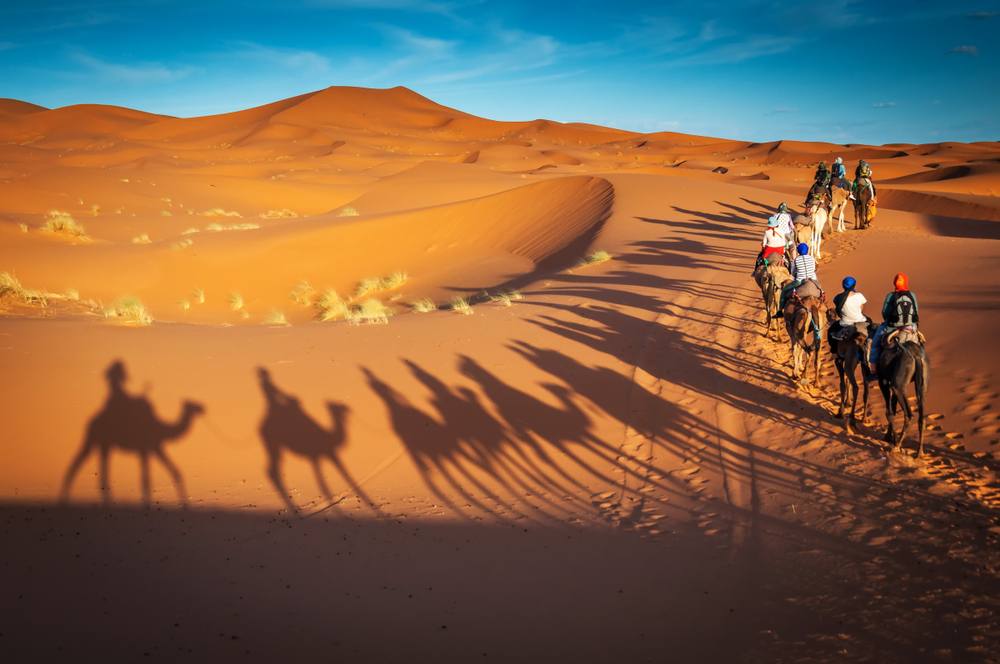
Yes — but only if you do it right. The near-unanimous traveler verdict on which desert, how long, and the standard-vs-luxury question.
I'm Moroccan, and here's my blunt take: the Sahara is the single most "worth it" experience in the country and the easiest to mess up. Wrong desert, wrong camp, wrong expectations — and you'll come home saying "never again." Here's how to get it right, built from what travelers actually report.
The verdict up front
| Merzouga (Erg Chebbi) | Zagora | |
|---|---|---|
| Dunes | Towering — up to 150m, the postcard Sahara | Small, rocky, underwhelming |
| Time needed | 3 days from Marrakech | 2 days from Marrakech |
| Camel ride | ~1 hour into real dunes | Can run along a highway (!!) |
| Verdict | First-timers: no contest | Only if you have just 2 days |
Traveler consensus is near-unanimous: if you have 3 days, Merzouga. Period. Zagora exists for people who physically cannot spare the third day — and even then, travelers warn the experience can disappoint, with camel rides that run "basically along a highway" before reaching real sand.
Merzouga in 2 days is punishing — ~9 hours of driving each way. Travelers and operators alike say don't.
Standard vs luxury camp: the only question that matters
This is where travelers waste the most money. Here's the truth, repeated across dozens of reviews:
The difference between standard and luxury is the bathroom. That's it. Standard camps ($50–80/person): real beds, shared bathrooms, dinner, drums around the fire, stars, sunrise. Luxury camps ($120–200): private bathroom inside your tent, sometimes heating, slightly better food. The dunes are the same dunes. The music is the same music. The food is nearly identical.
Multiple reviewers confirm: everything else is "nearly identical." And the luxury premium is only worth it with a solid operator — one traveler who paid extra for "luxury" in Zagora found an uncleaned toilet, no water for shower or faucet ("we washed our hands with our bottles"), and late disorganized meals: "it was not worth it at all."
My rule: ask one question before booking — "private bathroom in the tent, or shared?" If private: luxury can be worth it, especially for couples. If shared: book standard and spend the savings on a nicer riad in Fes.
The warning nobody believes until it happens: it's FREEZING
The single most repeated warning in every review thread: desert nights are cold. Reviewers report −2°C (28°F) in unheated tents. One May 2026 reviewer expected a long camel trek, got 10 minutes each way, then shivered through a −2°C night: "I didn't think it would be so cold, I don't think I'd do it again."
This happens even when daytime hits 100°F. The desert doesn't do moderation.
Pack: a fleece or warm mid-layer, warm socks, and a beanie if you're going October–April. Luxury camps with propane heaters still feel "chilly when you wake up." A February couple at a luxury camp called their huge bed and thick blankets "a real fortress against the cold" — and still missed sunrise because they slept through their alarms. (Set two.)
The camel trek: what it's actually like
About an hour at sunset, scenic, comfortable enough even for seniors — and completely touristy. Don't expect solitude: Merzouga is a busy operation with dozens of treks heading out at once. It's still magical — the light on the dunes at golden hour is unreal — just calibrate: this is a shared wonder, not a private expedition.
Wear long pants (chafing is real), bring a scarf for the wind, and keep your phone in a zipped pocket — sand gets everywhere.
How to book it
Best value: the 3-day shared Marrakech → Fes tour ($100–150/person). Transport, driver, hotels, camp — everything handled. Groups of 6–15, consistently rated the best-value way to do the desert. Book through your riad or a well-reviewed operator, not from a tout in Jemaa el-Fna.
Private tours cost more (€250–300+) but give you schedule control and better camps. Worth it for honeymoons or if you're picky about comfort.
What to check before paying:
- Private or shared bathroom? (see above)
- Which dunes — Erg Chebbi (Merzouga), confirmed in writing
- What's included: sandboarding usually yes, quad bikes usually extra
- How long is the camel trek? (1 hour is standard; 10 minutes is a rip-off)
- Heating in tents? (matters Oct–Apr)
The drives are the hidden cost (and the hidden reward)
Nobody warns you properly: the driving dominates a Sahara trip. Day 1: Marrakech→Dades (6–7h). Day 3: Merzouga→Fes (7–8h). That's a lot of van time.
But here's what travelers who rushed regret missing: the overland stops are half the experience. Aït Benhaddou at 8am before the buses. The Todra Gorges walk. The Tizi n'Tichka switchbacks. Travelers who flew or rushed between points consistently say the road was the trip.
My advice: don't fight the driving days. Download podcasts, sit on the right side for the Atlas views, and treat the van as a moving viewpoint.
So: is it worth it?
If you do Merzouga, 3 days, with the right camp and a fleece in your bag: it's the thing you'll talk about for years. The sunrise over Erg Chebbi, the drums, the absurd number of stars — no photo prepares you.
If you try to cram it into 2 days, book the cheapest camp sight unseen, and show up in shorts expecting tropical nights: you'll be the one writing the "never again" review.
The desert rewards preparation. Now you're prepared.
I'm Moroccan. Built from 2024–2026 traveler reviews — the glowing ones and the "never again" ones, because both teach you something.


Comments
Post a Comment