Moroccan Food: What to Eat and What to Skip
Morocco guide
Moroccan Food: What to Eat and What to Skip
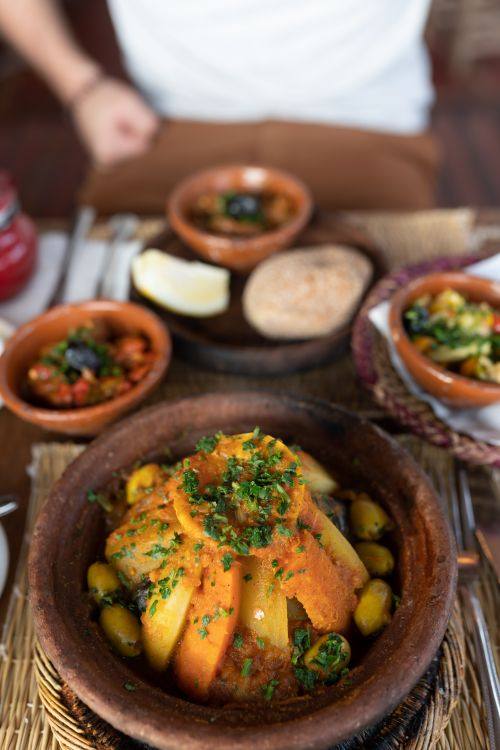
Beyond the tagine — including the dish tourists never hear about, the alley the locals swear by, and why you'll be sick of tagine by day 10.
I'm Moroccan, and I love our food — which is exactly why I'll tell you the truth about it: it's rich, it's heavy, it's repetitive, and tourists routinely make the same five mistakes with it. Here's how to eat well for a whole trip.
Start here: the non-negotiables
Tagine — the cone-pot stew. Chicken with preserved lemon and olives is the classic; lamb with prunes and almonds is the celebration version; kefta (spiced meatballs) with egg is the comfort version. You'll eat a dozen. That's fine.
Couscous — and here's what most guides bury: Friday is couscous day. The best couscous in Morocco is served on Fridays — it's tradition, families make it, restaurants make their best batch. If your trip includes a Friday, eat couscous that day. At a good spot it's fluffy, steamy, crowned with seven vegetables and caramelized onions. At a bad spot it's dry pellets. Friday maximizes your odds.
Pastilla — sweet-savory phyllo pie (chicken or pigeon), dusted with cinnamon and powdered sugar. Sounds wrong, tastes incredible. Fes does it best.
Harira — the tomato-chickpea-lentil soup Moroccans break fast with. Cheap (often under $1), nourishing, everywhere. The perfect light meal.
Tanjia — not tagine. This is Marrakech's true signature dish and most tourists never hear of it: beef with preserved lemon, garlic, and saffron, sealed in a clay urn and slow-cooked for hours in the ashes of a hammam furnace. It can't be made to order — ask your riad a day ahead to arrange it. If you eat one "secret" dish in Morocco, make it this one.
Where the locals actually eat
Mechoui Alley — off the northern edge of Jemaa el-Fna, a row of pits where whole lambs roast overnight in the ground. This is the insider pick travelers rave about: go at lunch, before it sells out, bring cash, order the shoulder (beats the leg). No sign worth noticing, no tourists traps — just lamb.
The snail-broth carts in the square — sounds like a dare, tastes like peppery, medicinal comfort. The broth is the point; the snails are... also fine.
Grill stalls (Jemaa el-Fna, stalls 1–100+): go once for the spectacle, eat lightly. Quality varies stall to stall and the touting is relentless. A full grilled dinner runs 80–120 MAD ($8–12).
Al Fassia (Gueliz, Marrakech) — the most-cited single restaurant in traveler reports: women-run since the late 1980s, precise cooking, and licensed (much of the medina isn't — alcohol availability matters to some travelers).
The mistakes that ruin stomachs (and trips)
1. Feasting on day one
The food is rich and heavy — overeating immediately upsets even strong stomachs. Travelers who land and gorge on day one spend day two in bed. Start light: chicken tagine, harira, bread. Ramp up.
2. Fear-eating nothing (then burning out)
The opposite mistake: a couple on a two-week tour avoided all street food fearing illness — then hit tagine burnout around day 10 and started hunting non-Moroccan restaurants desperately. The fix isn't avoidance, it's variety from the start: mix in grilled meats, seafood (Essaouira is the seafood town — eat there), and the occasional non-Moroccan meal before you're sick of tagine.
3. Ignoring the street-food rules
Travelers who eat street food safely swear by three rules: eat where turnover is high (a busy stall = fresh food), eat what's cooked in front of you, and be warier of raw salads and garnishes than of grilled meat. Drink bottled water. One TripAdvisor poster's #1 trip complaint was a hospital visit from an unhygienic stall — turnover is everything.
4. Expecting spice heat
A confession from a spice-loving dad blogger: after weeks, he found everyday Moroccan food "boring and bland" — he likes Thai-level heat. Moroccan food is aromatic, not hot. Harissa exists but isn't standard. If you crave heat, plan "cuisine breaks" at non-Moroccan restaurants.
5. Skipping breakfast culture
Msemen (flaky flatbread), baghrir (spongy pancakes with honey-butter), khlii (cured beef) with eggs — Moroccan breakfasts are a whole world. Your riad's breakfast is often the best meal of the day. Don't sleep through it.
Quick glossary for menus
- Msemen / rghaif: flaky square flatbread — breakfast staple
- Harira: tomato-chickpea soup
- Bissara: fava bean soup, peasant comfort food, delicious
- Rfissa: shredded msemen with lentils and chicken — order if you see it
- Seffa: sweet vermicelli with almonds — dessert-ish
- "Moroccan salads": cooked spiced vegetables, not lettuce. Order a selection.
- Mint tea: "Moroccan whiskey." Poured from height. Always accept.
What to skip
- The overpriced "traditional restaurant" with a tout outside. If someone's dragging you in, the food pays for the dragging.
- Pre-cut fruit from carts that's been sitting in the sun. Whole fruit you peel yourself: fine.
- Anything at a stall with no customers. The empty stall is empty for a reason.
I'm Moroccan. Built from 2024–2026 traveler reports — the raves, the hospital visits, and the tagine burnout — plus honest local perspective.

Comments
Post a Comment