Morocco 7-Day Itinerary for First-Time Visitors
Morocco guide
Morocco 7-Day Itinerary for First-Time Visitors
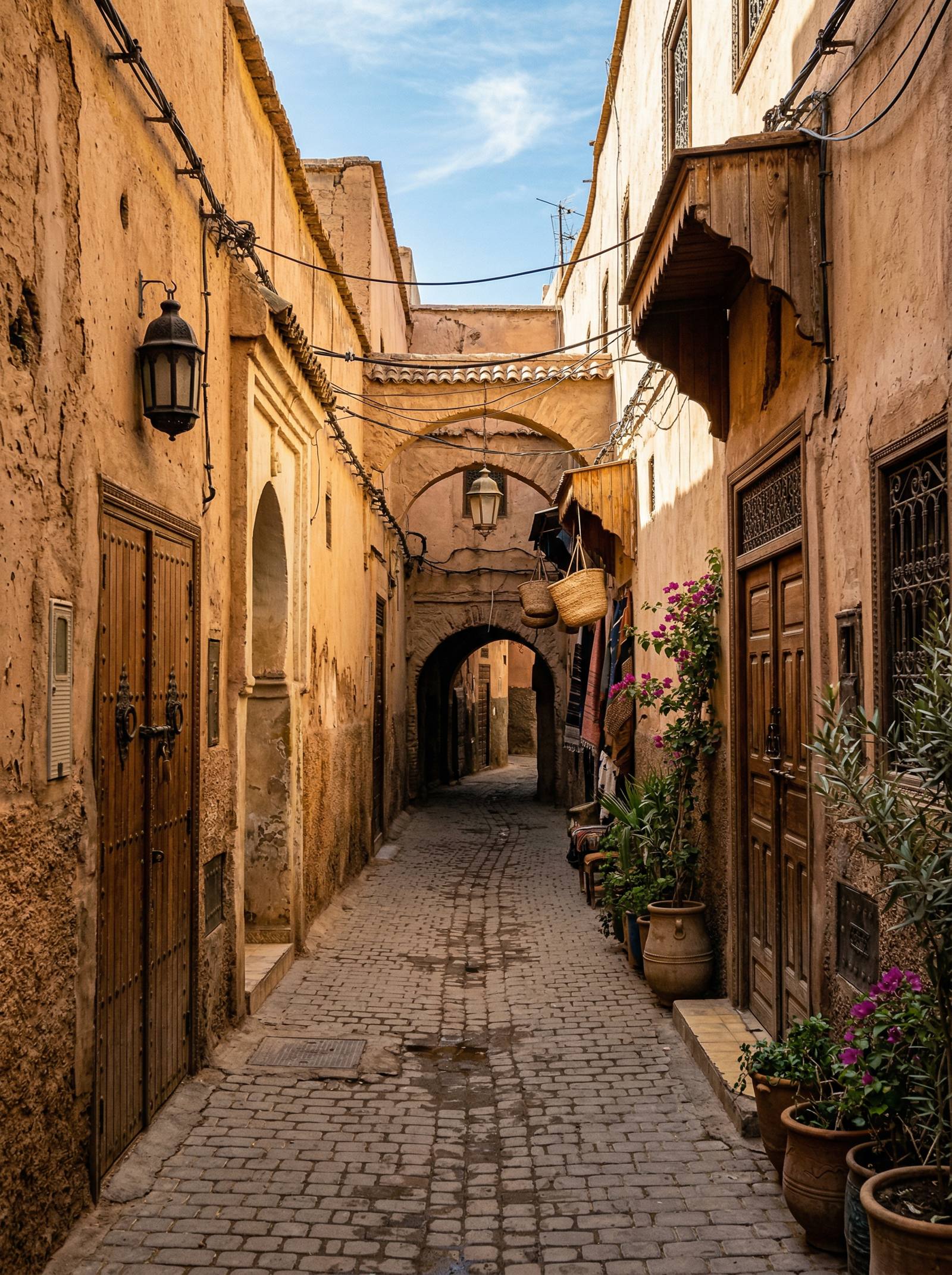
The classic route: Marrakech → Atlas & Aït Benhaddou → Sahara Desert → Fes. Realistic pacing, real prices, no fluff.
I'm Moroccan, and this is the trip I recommend to friends visiting for the first time. It hits the three things first-timers come for — the imperial cities, the Sahara, and the mountains — without spending the whole week in a car. I've kept driving days honest about how long they really take.
At a glance
| Day | Where | Highlights |
|---|---|---|
| 1 | Marrakech | Jemaa el-Fna, Koutoubia, medina first walk |
| 2 | Marrakech | Majorelle Garden, Bahia Palace, souks, Ben Youssef Madrasa |
| 3 | Marrakech → Dades Valley | High Atlas, Tizi n'Tichka pass, Aït Benhaddou |
| 4 | Dades → Merzouga (Sahara) | Todra Gorges, camel trek, night in a desert camp |
| 5 | Merzouga → Fes | Long drive day through the Middle Atlas |
| 6 | Fes | Fes el-Bali medina, tanneries, Al-Qarawiyyin |
| 7 | Fes | Slow morning, cooking class or souks, then depart |
Fly into Marrakech (RAK), fly out of Fes (FEZ) — open-jaw tickets save you a wasted backtrack day. If open-jaw is much more expensive, fly round-trip to Casablanca and add a train at either end.
A note on Chefchaouen: the famous blue city is about 4 hours each way from Fes — it does not work as a day trip before an evening flight. It deserves an overnight stay, so treat it as a reason to come back (or swap it for a Fes day if blue-city photos are non-negotiable for you — more on that in day 7).
Day 1: Arrive in Marrakech — ease in
Land, clear immigration (usually quick), and grab a taxi from the official stand outside arrivals — expect to pay 70–100 MAD ($7–10) to the medina. Agree the price before you get in.
Drop your bags at your riad and take it slow. Jet lag + Marrakech intensity is a lot on day one. Afternoon: walk to the Koutoubia Mosque (exterior only — non-Muslims can't enter mosques in Morocco, with very few exceptions) and its gardens, then let yourself get a little lost in the medina.
As the sun drops, head to Jemaa el-Fna, the giant square that is the beating heart of Marrakech. Eat dinner at one of the numbered grill stalls. A full dinner — grilled meats, bread, olives, mint tea — runs about 80–120 MAD ($8–12). Say no firmly but politely to the henna women and monkey handlers; a smile and "la, shukran" (no, thanks) works.
Sleep: A riad in the medina. Budget $25–40 (basic but charming), midrange $60–120 (rooftop pool, great breakfast), splurge $200+.
Local tip: Friday is couscous day across Morocco. If your trip includes a Friday, eat couscous — many small restaurants only serve it that day, and it's when families make it best. In Marrakech, ask your riad host where they eat it.
Day 2: Marrakech's greatest hits
Start early at the Jardin Majorelle (book tickets online the day before — it sells out; entry is around 170 MAD / $17 for foreign visitors). It's touristy but genuinely beautiful. The YSL museum next door is skippable unless you're a fashion fan.
Then walk to the Bahia Palace (~70 MAD) and the Ben Youssef Madrasa (~50 MAD) — a 16th-century Quranic school with some of the most stunning tilework in the country. Both are in the northern medina, easy to combine.
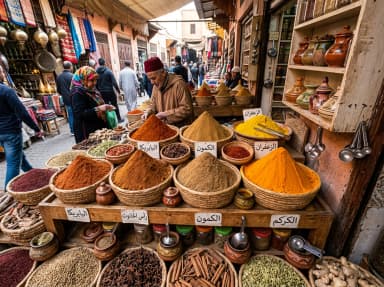
Afternoon: the souks. This is where you practice haggling — offer a third of the asking price and meet in the middle, always with a smile. Good buys: leather poufs, ceramics from Safi, saffron (real saffron is ~30 MAD/gram; if it's suspiciously cheap, it's dyed corn silk), argan oil.
Evening: rooftop dinner overlooking the medina. Try Nomad or Le Jardin (mains $10–18). Book ahead in high season.
Day 3: Over the Atlas to Aït Benhaddou and the Dades Valley
Today the road trip begins. The drive from Marrakech to the Dades Valley takes 6–7 hours with stops — this is not a day to rush.
Option A (recommended for first-timers): Book a 3-day Marrakech → Fes Sahara tour ($100–150/person). Note the direction: these tours end in Fes, they don't loop back to Marrakech — which is exactly what this itinerary needs. It covers transport, a driver, hotels, and the desert camp. Groups are usually 6–15 people, the minibuses are comfortable, and it removes all logistics stress. Book through your riad or a well-reviewed operator — not from a tout in the square.
Option B: Rent a car ($30–50/day). The roads are good; the mountain passes demand attention but are fine for confident drivers.
Stops today:
- Tizi n'Tichka pass (2,260m) — dramatic switchbacks, photo stops
- Aït Benhaddou — the famous mud-brick ksar, a UNESCO site and filming location for Gladiator and Game of Thrones. Give it 1.5–2 hours; cross the river and climb to the granary for the view.
Local tip: Aït Benhaddou is mobbed by tour buses from 10am to 3pm. If you're driving yourself, go at 8am — you'll have the ksar nearly to yourself and the light is better for photos.
- Overnight in the Dades Valley (town of Boumalne Dades), in a kasbah-style guesthouse ($30–60).
Day 4: Todra Gorges → Merzouga — into the Sahara
Morning: the Todra Gorges, a 300-meter canyon you can walk into in 20 minutes from the road. Then the long push east — about 4–5 hours to Merzouga.
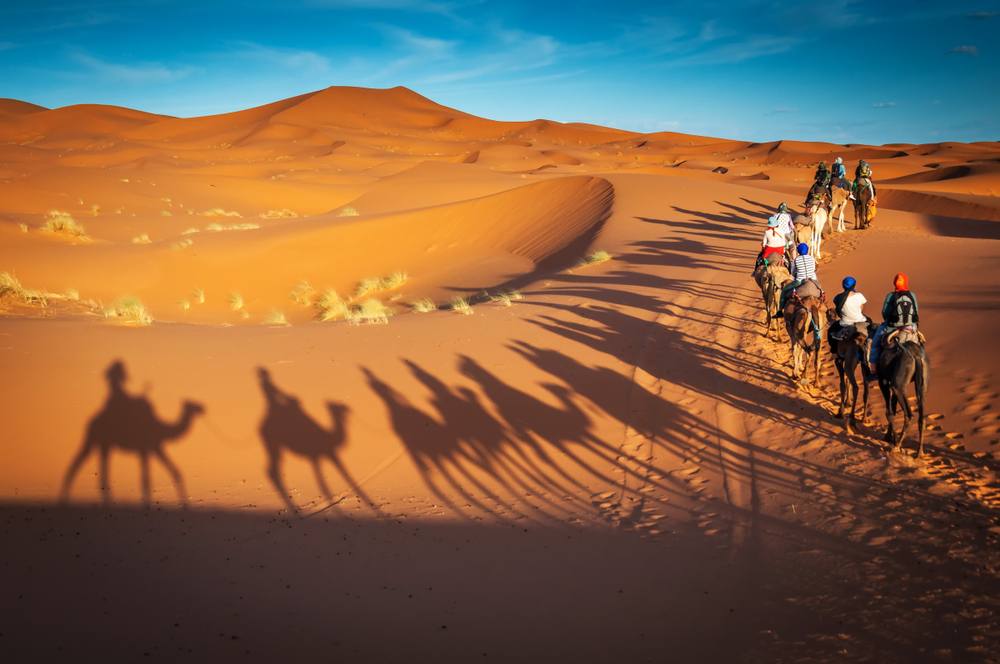
Arrive mid-afternoon. You'll switch to camels (about an hour's ride — wear long pants) and trek into the Erg Chebbi dunes as the light turns gold. This is the Morocco of postcards, and it genuinely lives up to it.
Your night: a desert camp. Standard camps ($50–80/person on the tour) have real beds, shared bathrooms, dinner, drums around the fire, and sunrise over the dunes. Luxury camps ($120–200) add private bathrooms and better food.
Local tip: the single question that determines whether a "luxury" camp is worth it: private bathroom in your tent, or shared? Everything else — the food, the music, the dunes — is nearly identical. If the answer is shared bathrooms, save your money and book standard.
It gets cold at night, even in summer — bring a fleece. And non-negotiable: wake up for sunrise. Set two alarms.
Day 5: Merzouga → Fes (the long drive)
The least glamorous day: 7–8 hours from the desert to Fes, through the Middle Atlas (watch for Barbary macaques near Azrou and snow-capped peaks in winter). On a tour, you'll stop in Midelt for lunch.
You'll reach Fes by late afternoon — just enough time to find your riad in Fes el-Bali (the old medina) and have dinner. Fes is Morocco's spiritual and artisanal capital, and many travelers end up liking it more than Marrakech. It's rawer, less polished, more real.
Dinner tip: try a pastilla (sweet-savory pie dusted with cinnamon — chicken or pigeon) — Fes does it best. Around 60–90 MAD ($6–9) in a midrange spot.
Day 6: Fes — the world's oldest living medina
Fes el-Bali is a UNESCO World Heritage site and largely car-free — 9,000+ alleyways that have functioned the same way for 1,200 years. Getting lost is the point, but for your first morning, hire an official guide (~200–300 MAD / $20–30 for a half day, arrange via your riad). It transforms the experience, and it keeps the unofficial "guides" (a common hassle) away.
Don't miss:
- Chouara Tannery — the famous leather dye pits. View from a terrace (buy nothing out of obligation; a small tip or a mint tea purchase is the custom).
- Al-Qarawiyyin — founded in 859 AD, the world's oldest continuously operating university (view from outside).
- Bou Inania Madrasa — one of the few religious schools in Morocco that non-Muslims can enter, and worth it for the courtyard alone.
- The souks of the Kissaria for textiles and the pottery quarter for Fes blue ceramics.
Evening: dinner on a rooftop overlooking the medina as the call to prayer echoes across the valley.
Day 7: Slow Fes morning, then depart
Don't try to squeeze Chefchaouen in today — at 4 hours each way, it's an overnight trip, not a day trip. Instead:
- Morning: revisit your favorite quarter without a agenda, or take a cooking class ($30–50, book via your riad — you'll make tagine and msemen and eat the results).
- If flying from Fes: Fes-Saïss airport (FEZ) has direct flights to several European cities; for the US you'll connect via Casablanca or Europe. Leave 3 hours before departure.
- If flying from Casablanca: take the morning train Fes → Casablanca (~4 hours, ~150 MAD / $15 second class), then the airport shuttle from Casa Voyageurs. Leave a 4-hour buffer before an international flight.
Want Chefchaouen anyway? The honest options: (a) add an 8th day and overnight there, or (b) swap out a Marrakech day — but I'd rather you see Marrakech properly. Save the blue city for trip two.
How to get around
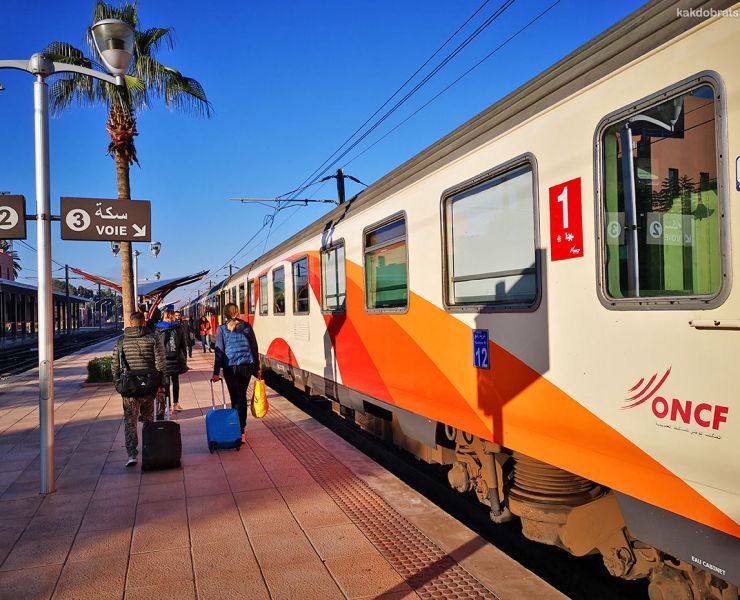
- Trains (ONCF): excellent between Tangier–Rabat–Casablanca–Marrakech–Fes. The Al Boraq high-speed line does Tangier–Casablanca in ~2h10. Book at oncf-voyages.ma. No trains to the Sahara or Chefchaouen.
- Domestic flights: Ryanair flies direct Marrakech → Fes (about 5x weekly, ~1h05, often from ~$30–40 one-way), and Royal Air Maroc serves the route too. Schedules change seasonally — check before counting on it. Worth it if you'd rather skip the long day-5 drive.
- Buses (CTM): the reliable long-distance bus company — covers everywhere trains don't. Book at ctm.ma.
- Grand taxis: shared Mercedes sedans between cities, depart when full (6 passengers). Cheap and an experience in itself. Negotiate private hire if you want the whole car.
- In cities: petit taxis for short hops — insist on the meter ("compteur") before you close the door, especially at night when drivers suddenly "forget" it exists.
What will it cost? (per person, 7 days)
| Style | Daily average | 7-day total |
|---|---|---|
| Budget (hostels, street food, buses) | $40–60 | $300–450 |
| Midrange (riads, restaurants, 3-day Sahara tour) | $90–140 | $650–1,000 |
| Comfort (nice riads, private driver, luxury camp) | $180–300 | $1,300–2,100 |
These assume double occupancy for hotels. Morocco remains one of the best-value destinations in the world — a $100/day trip here feels like $250/day in Western Europe.
Do Americans need a visa for Morocco?
No — US passport holders get 90 days visa-free, no application, no fee. Your passport just needs to be valid for the duration of your stay. (Rules can change — I always tell people to double-check the US State Department's Morocco page before booking.)
Is Morocco safe?
Short answer: yes, for tourists exercising normal caution. The US State Department rates Morocco Level 2 ("exercise increased caution") — the same tier as France, Italy, and Spain, mostly over a general terrorism risk that has not materialized against tourists in over a decade. In practice, the issues you'll actually encounter are petty: pushy touts, taxi overcharging, pickpockets in crowds — the same as any major tourist city.
Common-sense rules: keep valuables out of sight in the medinas, don't walk unlit alleys alone at 2am (same as anywhere), and solo women travelers — of whom there are many — do fine with the usual precautions plus slightly more conservative dress in non-tourist areas.
Practical tips
- Money: the dirham (MAD) is hard to find outside Morocco, so plan to exchange or withdraw on arrival. ATMs are everywhere — use actual bank ATMs (not standalone Euronet machines) and check what your home bank charges for foreign withdrawals before you go. Cash is king in souks, taxis, and small towns. Roughly 10 MAD ≈ $1 — check the current rate.
- SIM card: buy at the airport — Maroc Telecom, Orange, or Inwi. A tourist pack with 10–20 GB costs ~50–100 MAD ($5–10). You'll want data for maps and translation.
- Language: Darija (Moroccan Arabic) and French. English works in tourist zones and with younger people. Learn five words of French or Arabic — effort is hugely appreciated.
- What to pack: layers (desert nights are cold, mountain days are hot), comfortable walking shoes with grip (medina alleys are uneven), a scarf (sun, dust, modesty near religious sites), sunscreen.
- Best months: March–May and September–November. Summer in Marrakech hits 110°F (43°C); winter nights in Fes and the desert drop near freezing.
- Haggling: expected in souks and with taxis without meters — never in restaurants with printed menus or fixed-price shops. Start at a third, settle around half, keep smiling.
- Tipping: 10% in restaurants, small change for porters and guides.
Is 7 days enough for Morocco?
Honestly? It's the perfect first trip — enough to fall in love, not enough to see everything. You'll skip the Atlantic coast (Essaouira), the blue city deserves its own overnight, and the south (Agadir, Legzira beach) is another trip entirely. That's fine. Morocco rewards return visits, and this itinerary gives you the essential story: imperial cities, mountains, desert.
I'm Moroccan, and I wrote this the way I'd brief a friend — prices are realistic ranges from late 2026, not scraped from a booking site. Exchange roughly 10 MAD = $1; verify before you go. If something's changed on the ground, I'd genuinely like to know so I can fix it.


Comments
Post a Comment