How Much Money to Bring to Morocco
Morocco guide
How Much Money to Bring to Morocco
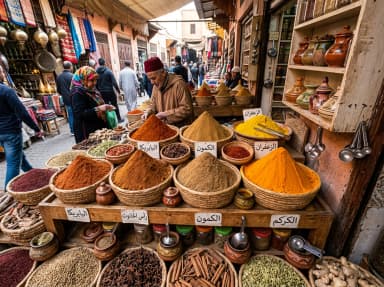
What a week actually costs — from real traveler reports, not brochure math. Plus the ATM trick that saves every visitor money.
I'm Moroccan, and the question I get most from American friends is some version of: "Is Morocco expensive?" The honest answer: it's one of the best-value destinations on earth — if you know where the money traps are. A couple recently backpacked 12 days across Marrakech, the Sahara, Fes, and Chefchaouen averaging $36/person/day (excluding flights). A comfortable two-week trip with flights and a rental car came in under €91/day/person. Those are real reported numbers, not marketing.
Here's how to budget yours.
The daily budget bands (per person)
| Style | Per day | What it looks like |
|---|---|---|
| Budget | $30–50 | Hostels, street food, buses, free sights |
| Midrange | $60–100 | Riads, restaurants, one paid activity/day |
| Comfort | $150–300+ | Nice riads, private driver, fine dining |
Aggregated traveler data puts the average Morocco trip at roughly $83–89/day, with Marrakech a bit higher at ~$100/day. A realistic midrange day: hotel $50 + meals $25 + transport $5 + activity $25 ≈ $105.
For a 7-day trip, I'd tell a midrange traveler to budget $700–1,000 plus flights. You can absolutely do it for $400 if you're disciplined, and you'll struggle to spend $2,000 unless you're trying.
Cash is king (and coins are the currency of survival)
This is the single most important money lesson for Morocco: the souks, the taxis, the small eateries, the tipping — it's all cash. Cards work in hotels, malls, and nicer restaurants, but some places add a 3–5% card surcharge.
And here's what nobody tells you: carry small coins. You'll need them constantly — public toilets, porters, guides, haggling change. One traveler on a group tour said their guide drilled this into them on day one because "you'll need cash and coins for toilets, everywhere."
Local tip: on your first day, ask your riad host or driver to break a 200 MAD note into small bills and coins. Small change is genuinely more powerful than large bills in Morocco — a 200 MAD note at a street stall is as useful as a $100 bill at an American food truck.
ATMs: the #1 money gotcha (and the fix)
Most Moroccan bank ATMs charge 25–45 MAD ($2.50–4.50) per withdrawal — on top of whatever your home bank charges. That adds up fast.
Here's the trick travelers on TripAdvisor's Morocco forum repeat like a mantra: Al Barid Bank (the post office bank) ATMs are fee-free. Walk past the tourist-trap Euronet machines, find the yellow Al Barid signs, withdraw there.
A cautionary tale: one traveler withdrew 2,000 MAD from a BMCI ATM with no problem — then a 200 MAD withdrawal "failed for insufficient funds." The branch manager confirmed BMCI adds an undisclosed fee that can push small withdrawals over your limit. They walked to the Al Barid next door and the money came out fine, no fee.
My ATM rules:
- Use Al Barid ATMs when you can find them.
- Withdraw larger amounts less often (fewer fees).
- Never use Euronet standalone machines — worst rates, highest fees.
- Tell your bank you're traveling, and check their foreign ATM fee before you go. Better yet, bring a Wise or Revolut card — travelers report they work smoothly for Moroccan withdrawals.
The dirham: exchange on arrival
The Moroccan dirham (MAD) is a closed currency — you basically can't get it outside Morocco, so don't bother trying at home. Land, then:
- Airport exchange counters: fine for your first 500–1,000 MAD (taxi + SIM + snacks). Rates aren't the best but the convenience is worth it.
- ATMs: best ongoing rates (see above).
- Exchange offices in cities: competitive rates, no commission — good for larger amounts.
Don't pay in euros or dollars. Some tourist shops accept them, but the hidden exchange rate is terrible. As one traveler put it: "Would YOU rather be paid in euros in your hometown?" Pay in dirhams, always.
Rough math to keep in your head: 10 MAD ≈ $1. A 30 MAD tagine is $3. A 200 MAD taxi is $20.
What things actually cost
Real prices travelers report (2024–2026):
- Street tagine: $3–6 | Midrange restaurant main: $8–15
- Mint tea / espresso: ~$1
- SIM + 50GB data: ~$5 (50 MAD)
- Petit taxi across town: $1–3 (metered)
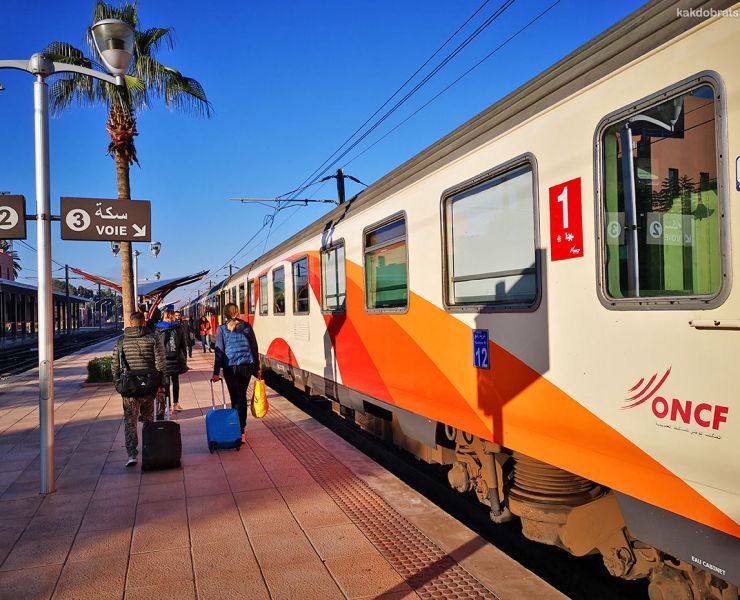
- First-class train (e.g., Casa–Marrakech): under $20
- 3-day group Sahara tour: ~$100–150/person
- Riad: budget $25–40, midrange $60–120, splurge $200+
Tipping: the short version
- Restaurants: ~10% (not obligatory, but expected in midrange+ places)
- Porters, guides, drivers: 10–20 MAD each
- Small services: round up, hand over coins
When in doubt, tip. Wages are low and your $2 means more here than at home.
So how much cash should you actually bring?
For a 7-day midrange trip: withdraw the equivalent of $400–500 in dirhams across the week (in 2–3 ATM visits), and keep a card for hotels and bigger restaurant bills. Bring $100–200 in USD/EUR as an emergency backup — exchangeable anywhere.
You won't need more. Morocco is cheap, honest about it, and the only people who overspend are the ones who didn't read the ATM section above.
I'm Moroccan and I wrote this from real traveler reports (2024–2026) plus local knowledge. Prices move — treat them as realistic ranges, not guarantees.


Comments
Post a Comment